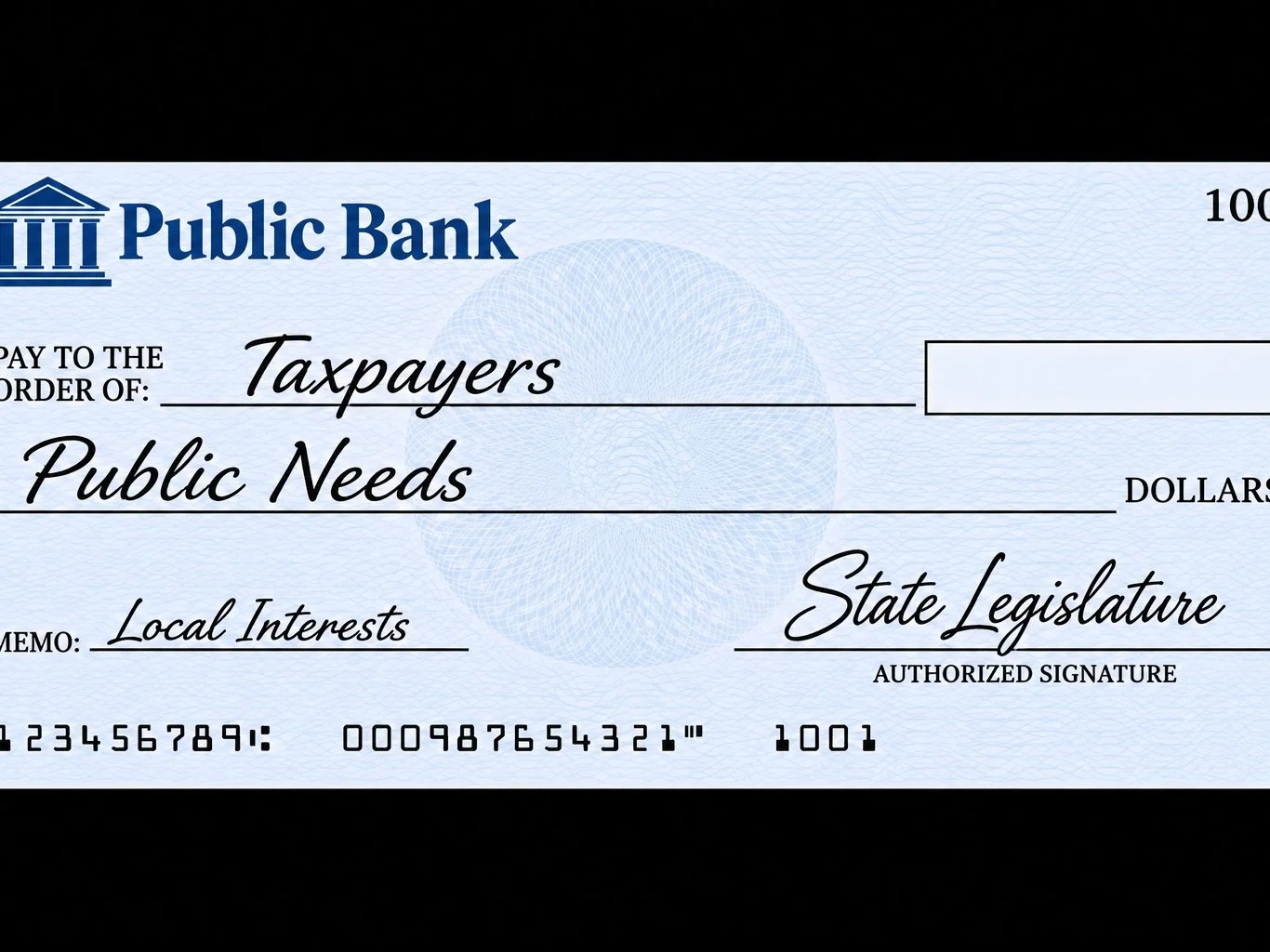
Among other surprising results from November’s elections, San Francisco’s voters approved a plan to make it the first major U.S. city to establish a municipal public bank.
San Francisco’s not an outlier in moving toward public banking. Across the bay, Oakland, Richmond and Alameda County have combined to hire a CEO and a prospective board to build a regional public bank. The City of Los Angeles has advanced plans for a municipal public bank aimed at financing affordable housing and climate resilience. California’s state legislature is considering a state bank to finance housing and disaster recovery.
Establishment of public banking is under active consideration in New York, New Jersey, Massachusetts, Washington, Oregon, New Mexico and Wisconsin. Philadelphia has created a public financial authority to leverage city funds to support local minority and women-owned businesses and community lenders while working toward a full public bank charter.
Public banking?
Socialism!
Blue state overreach!
Not really. North Dakota, one of the politically reddest of states, has had a state bank for more than 100 years. It’s so popular that in-state opposition hardly exists. Here’s why:
Why the Bank of North Dakota Works
The bank’s latest annual report showed a net profit of $231.8 million, $10.7 billion in assets, a return on investment of 17.2% and an A+ Standard and Poor rating. During recent years the bank has financed a legislature directed $1 billion+ loan portfolio for school construction, water projects, medical and rail infrastructure and student loans. In addition, the bank makes farm, ranch and commercial business loans.
All this is possible because the state bank is the recipient of state tax deposits and other public funds. It uses its assets for direct loans and to partner with local commercial banks and credit unions to provide financing they otherwise couldn’t afford. For private banking, the state bank is a bankers’ bank.
North Dakota got into the banking business early in the 20th century, at a time when the state was exploited by out-of-state bankers, grain dealers and railroad monopolies. In 1919, a grassroots populist movement called the Nonpartisan League (NPL) gained control of the state legislature and the governorship and created the state bank to serve the needs of agriculture, commerce and the public at large. Subsequent efforts by the financial exploiters to kill it were unsuccessful.
Through the years since, the bank has helped North Dakota farmers survive the Great Depression, droughts and other natural disasters. It was the first bank in the U.S. to offer student loans. The bank has reached its current level of financial strength with the support of both the Democratic and Republican parties.
Why Cities and States Are Turning to Public Banking Now
After 107 years as the only state with a public bank, why are other public entities just now following North Dakota’s lead into public banking? The short answer: because they need to.
Cities and states across the U.S. are facing major public expenses that are becoming difficult to finance through traditional banking. High interest rates and Wall Street underwriting fees have made municipal borrowing hugely expensive. By keeping tax revenues in public banks rather than in mega banks, states and local governments would have resources to lend directly to local projects and at lower cost.
Over the past few decades banking mergers have resulted in the loss of thousands of locally owned banks and savings and loan associations that once serviced local financing needs and kept the profits locally. Now those profits largely go to huge banks that in turn invest elsewhere, often in risky ventures in search of higher returns. (See banking collapse and taxpayer financed bailout, 2008).
Local Financial Autonomy in Times of Crisis
Then there’s the matter of self-preservation. In 2025, the Bank of North Dakota helped the state and individuals with short term emergency low-interest loans during the 43-day federal government shutdown and severe damage from storms. The public bank served public needs that distant commercial banking wouldn’t touch.
With the federal deficit becoming untenable, increasing threats from global warming and Congress iffy as an arm to lean on in times of disaster, state and local governments are ever more aware of the appeal of local financial autonomy.
After November’s election, an estimated 75% of the U.S. population lives in states headed by a Democratic Party governor and with Democratic majorities in the legislature. Expect to see more movement toward state banking and other public financing entities.
Ruby red North Dakota has provided the example. Maybe now public banking’s time has come for other U.S. states and cities too.
Comments? Criticism? Contact Joe Rothstein at jrothstein@rothstein.net
Always Get It’s Always Something
Sign up to get the most recent column set to your inbox for free.



What happens when a fun-loving, charismatic, reform-minded Mexican-American billionairess becomes president of the United States and strikes fear in the pocketbooks of a cabal of the rich and powerful?