Hawaii Just Voted to End Citizens United; Others May Quickly Follow
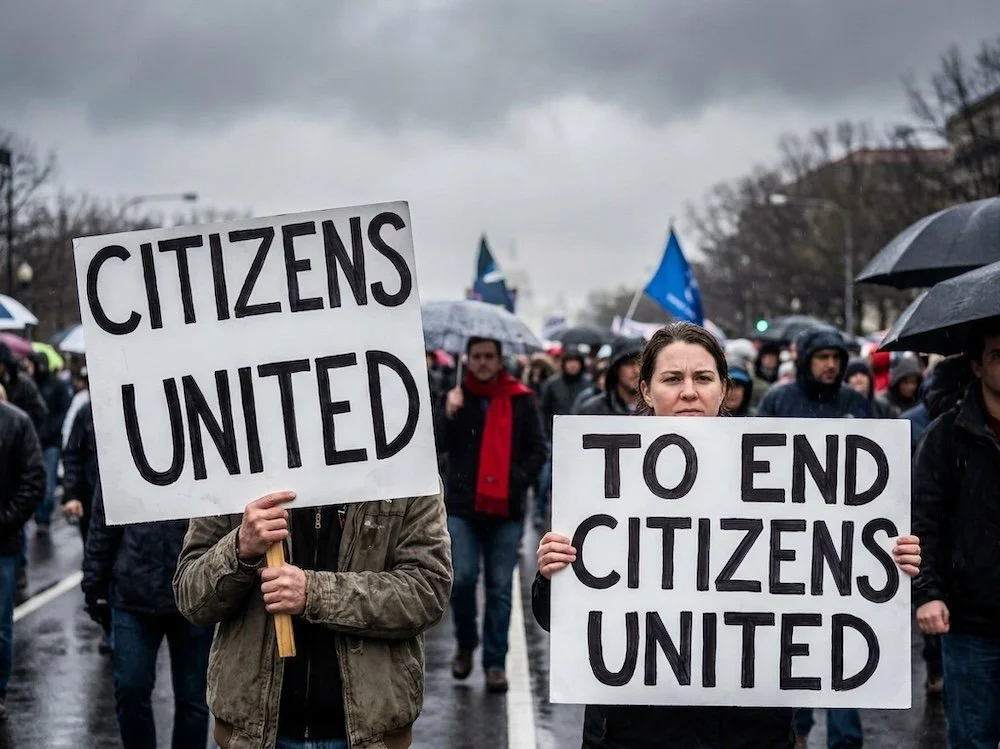
In 2010, overturning a century of restrictions, the Supreme Court opened the coffers of corporations to permit political campaign spending.
Prior court rulings had recognized the risks of allowing deep-pocketed corporations unlimited access to the campaign gene pool. Risks of corruption for personal gain. Risks that so much concentrated money could distort the political process itself.
But in the Roberts court’s opinion, as expressed by then Justice Anthony Kennedy, “This Court now concludes that independent expenditures, including those made by corporations, do not give rise to corruption or the appearance of corruption.”
That view was met with jaw-dropping disbelief when the Citizens United decision was released. Today it belongs in a different galaxy.
The Flood of Corporate Money Into Elections
Independent expenditures by outside groups exploded by more than 28-fold from 2008 to 2024, from $144 million to $4.21 billion. That’s just reported money. The system also is awash in unreported dark money, with no evidence who’s behind it. But for-profit and non-profit corporations certainly are prime suspects.
A week ago, $33 million was reported spent on a Republican congressional primary campaign in Kentucky and bought the winner victory at the cost of more than $560 a vote. Just the other day, the Texas Republican primary run-off for the U.S. Senate clocked in with more than $100 million in spending.
A poll released by the news site Politico in early May found that only 5% disagreed with the statement that there’s too much money in politics. In today’s divided politics, that’s astounding unanimity. You can be certain that most candidates also agree. Spending tedious hours begging for money isn’t anyone’s idea of a good time.
Dozens of groups have been laboring for years to enact a constitutional amendment to overturn Citizens United. And they’ve been making progress. Twenty-two states have signed on. It’s been a hard, slow slog, and there’s still 15 more states to go to get to the next lap required for enactment.
The State-Level Strategy That Changes Everything
But the think tank Committee for American Progress has come up with an end run that just might work. It’s a relatively simple idea. You can read the strategy here.
In brief:
Corporations are chartered by states. That’s been recognized by court decisions since the founding of the U.S. Each state determines the operational rules and restrictions for any corporation wishing to do business there. If one of those restrictions is that corporate money can’t be spent in political elections, the federal government would have no legal oversight to deny it.
The Roberts court spelled this out specifically in its Citizens United decision:
“Citizens United is a nonprofit corporation to which the Commonwealth of Virginia has granted the same powers as an individual to do all things necessary or convenient to carry out its business and affairs, among them (since Virginia law does not specify otherwise), the power to spend independently in candidate elections.”
In other words, if Virginia had specified that spending corporate money for candidate elections was prohibited, the Citizens United decision would not have applied.
Hawaii Lights the Fuse as Other States Prepare to Follow
Two weeks ago, Hawaii’s governor signed such a prohibition into state law. Montana activists are working to place a similar initiative on the state’s November ballot. In Pennsylvania, Colorado and elsewhere, similar groups have formed under the banner “Transparent Election Initiative.” Where initiatives are permitted, groups will be collecting signatures for ballots this year and in 2008. Otherwise, such as Pennsylvania, the road to repeal will go through state legislatures and governors.
This plan can supersize quickly once a few states are aboard because when a state prohibits its own chartered corporations from spending politically, that will apply to corporations from other states that do business in the state. Delaware chartered states, particularly. More than 2 million corporations are chartered in Delaware. That’s half of all U.S. chartered corporations, including more than 60% of the Fortune 500.
Will state bans be red meat for another bizarre Supreme Court decision? No guarantees. But nearly 250 years of state autonomy with regard to corporate charters would need to be overturned. That could be a reach too far, even for the Roberts court.
Also, don’t discount the near unanimity of the American people who want Citizens United gone, and the possibility of a future Democratic party government itching to dive into court corruption if it senses strong public support. Supreme Court justices read news stories about such things, too.
The match has been lit. Expect it to spread like wildfire.
Comments? Criticism? Contact Joe Rothstein at jrothstein@rothstein.net
Always Get It’s Always Something
Sign up to get the most recent column set to your inbox for free.


What happens when a fun-loving, charismatic, reform-minded Mexican-American billionairess becomes president of the United States and strikes fear in the pocketbooks of a cabal of the rich and powerful?