July 4: Valentine's Day for Democracy
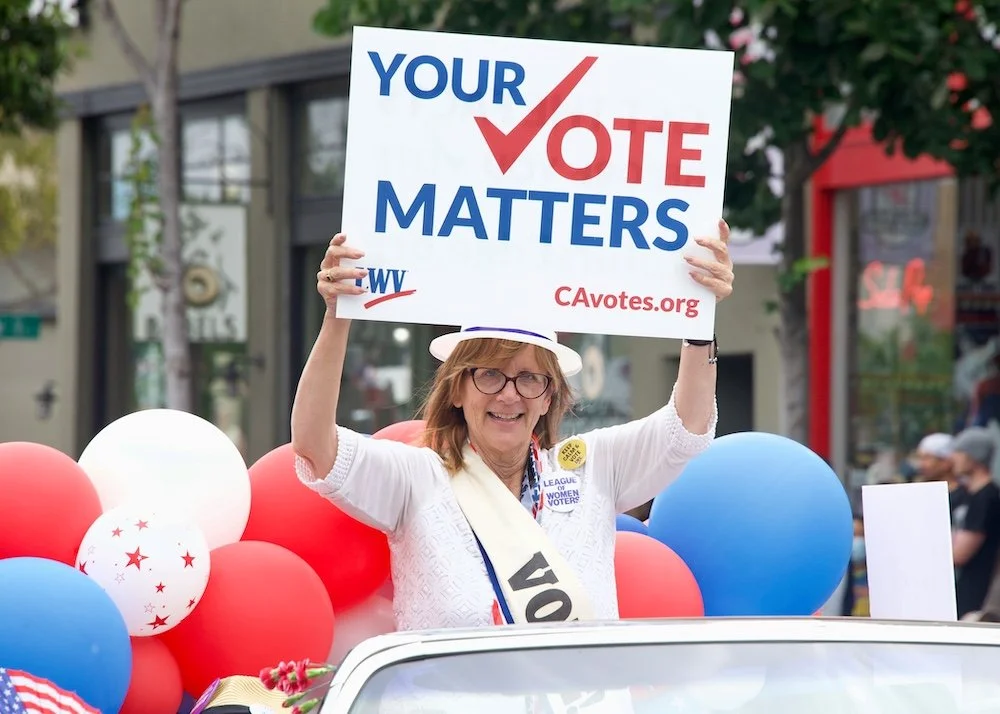
The Fourth of July.
It’s a huge date on every political candidate’s calendar. If you’re not walking or riding in a parade, or giving a speech, or somehow not attaching yourself to the crowds and events where your voters gather, you’re not a serious contender.
There’s no other day like it on the calendar. Most U.S. holidays are celebrated with days off at retail sales, or picnics, outdoor barbeques, or just relaxation. July 4 is all of that, plus full immersion in the celebration of democracy.
When I was actively working in political campaigns, the Fourth of July was an essential day on my calendar, too. Peoples’ love for the United States and all its symbolism shone through the film and video we captured as it did in few other events. Geography nor community size mattered. Active celebrations were everywhere. Most Americans genuinely love this country, and express it with vigor on the Fourth of July.
Last week I had a surprisingly emotional experience. I voted.
It happens each time I walk into a polling place and cast a ballot. What am I feeling?
Confirmation that I can? Without fear?
Am I feeling my freedom in the most direct possible way? The right to help choose how I want to be governed, and who I want to trust with that power?
Why Voting Remains the Heart of Democracy
There are lots of problems with this system of government. There always has been.
During my years working professionally in political campaigns, I’ve met a great many candidates, dozens of whom won elections and went on to hold powerful offices. I have no illusions that those we elect are always more able than many who never run for office. In elections we give extraordinary responsibility and power to mostly ordinary people.
That’s not a weakness in our system, it’s a strength. It provides the opportunity for those with little individual economic power or status voice and leverage in their own governance. That’s the definition of democracy. And it provides one more essential power, the right to change that governance if and when the majority senses the need for change.
The right to make changes creates a system that’s self-correcting. When things go off-course, as they always will, the public has a way to change direction. That’s our essential bedrock.
Democracy is more than voting, of course. It’s all the opportunities and protections that come with the package. But without the right to vote the rest is just a struggle for power among those with the resources to enter the ring.
The Enduring Promise of the Fourth of July
The Fourth of July is the date when a group of men, then citizens of their states, pledged “their lives, their fortunes and their sacred honor,” to break the mold of autocratic rule and gamble that the governed could best decide how they would be governed. And that success would best rely on those states uniting rather going it alone.
There was little history that such a government would work. But once the U.S. proved that it can, nearly every other society on earth has strived for it.
How dedicated are we to continue what those founders began? Look no further than the joy and energy of those marching in virtually every community of every size this Fourth of July.
They, and we, will be celebrating democracy, not its demise.
Comments? Criticism? Contact Joe Rothstein at jrothstein@rothstein.net
Always Get It’s Always Something
Sign up to get the most recent column set to your inbox for free.


What happens when a fun-loving, charismatic, reform-minded Mexican-American billionairess becomes president of the United States and strikes fear in the pocketbooks of a cabal of the rich and powerful?