After We Elect A New Congress, How Do We Fix It So It Works?
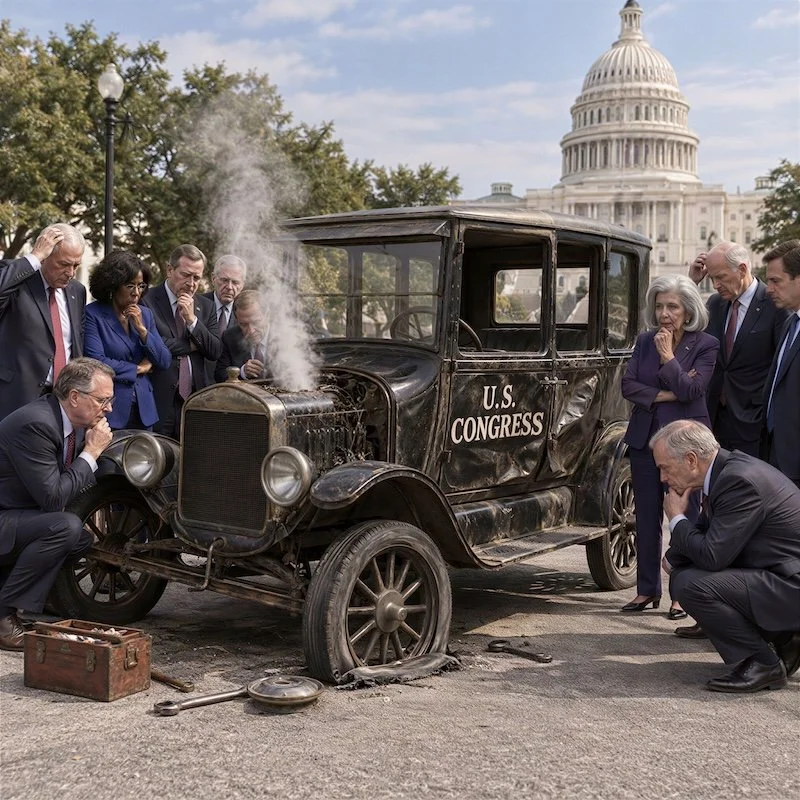
In July, Gallup released a poll showing that only 9% of U.S. voters have confidence in Congress. A stunning and dangerous disconnect for the viability of our democracy.
Getting representative government back on track will require major changes in our current system, not merely cosmetic tinkering around its edges. In that spirit, I’m offering a suggestion for reform: Select members of Congress the way we do jurors. Here’s an outline of how that might work.
From the congressional district’s registered voters’ list, excuse those who for health, hardship or other disabling factors cannot be included. From those remaining, randomly select 12 people who would represent the district in Washington, D.C. Once there, the 12 would select one of their number to be the voting member, the way a jury panel elects its foreman. The others would serve as collegial partners, having a voice in voting decisions. For issues, the team would have access to subject matter experts. For constituent service, it would have professional staff.
At the end of the year, the 12 person congressional panel would come home and a new group of 12 would be randomly selected.
The Case for Selecting Congress Like Jurors
On the face of it, that idea sounds ridiculous, doesn’t it? But look closer. Random selection is how we select juries that often decide whether someone stays free or is imprisoned, sometimes for life, sometimes sentenced to death. The jury system has a far higher public approval rating than Congress. Drafting people for public service is how we’ve built armies to fight our wars. It’s in the spirit of the National Guard, the Peace Corps, and other public service programs that have served us well over the years.
And it has other virtues.
Political partisanship no longer would be a defining factor because the selection process would be random. The member/group could decide its vote based on its consideration of merit, without regard to party discipline.
Since there no longer would be expensive campaigns, Big money donors and entrenched lobbyists would have less influence.
Gerrymandering would no longer be a factor. Districts would be more sensibly drawn to represent common interests rather than politically weaponized.
Members would not need to be rich to serve. In fact, the very rich more likely would try to find loopholes to avoid service.
Congress would collectively benefit from having members with wider work and interest experiences than the lawyer dominated congresses we’ve had.
Members would no longer be making promises they don’t intend to or can’t keep, because they won’t be running for the office.
And think of this. Those who serve would return to their homes, neighborhoods and work places needing to explain their votes and actions to people closest to their lives, increasing the probability that they will be more representative of local needs and attitudes on local, state and national issues.
Personally, I see much merit in this proposal. I also know it’s not going to happen. I’ve offered it with my tongue firmly in my cheek.
Real Solutions for Campaign Finance and Election Rules
But to rewire Congress for performance and efficiency in the AI era, we must be thinking big and willing to accept major reforms.
Money obviously is the place to begin. Getting big, dark money out of our campaigns is such a popular issue it would easily win public approval as a constitutional amendment. The public outcry just needs to be loud enough to force Congress and state legislators to do it. And it is doable. Twenty-three states already have asked Congress to endorse such an amendment. Fourteen more are needed to send the amendment back to the states for ratification.
Endless campaigns also negatively impact representation. Who has time and resources to run for office for a year or more? Who in the voting public isn’t sick of all the ads and name-calling months before voting even begins? Potential solutions aren’t hard to find.
Japan limits official general election campaigns to 12 days. South Korea, 22. Mexico, 90 days. Canada, 50 days maximum. France, two weeks for each round. The U.S. could limit campaign days with a constitutional amendment. Given current public attitudes about campaign length, that would likely be popular for legislators to propose—and very much in their own self-interest to make happen.
Practical Steps for Congressional Reform
“A lie runs halfway around the world before truth even gets its boots on.” Mark Twain often is credited with that wisdom. It was true even in his era when the fastest communication system was the wired telegram. Now, political advertising is riddled with lies and distortions, difficult to counter in the heat of expensive campaigns. It comes at us in multiple forms and is a constant in our lives. To combat this, the United Kingdom bans paid political TV and radio ads entirely, instead offering each political party free public air time. And the UK caps political spending on streaming media. It would not take a constitutional amendment for Congress to place guardrails on communications systems owned by the public.
And consider this:
In 1987, Congress met at Independence Hall in Philadelphia to commemorate the nation’s bicentennial. In 2002, Congress met at Federal Hall in New York to commemorate 9/11. The Constitution requires Washington, D.C. to be the seat of government, but leaves it to Congress to decide where it meets. What if the House and Senate would schedule a few sessions in cities around the country a few times a year when major bills are up for debate? Why? To increase public awareness, involvement and oversight. To contribute to public education about how Congress works. To make important decisions distant from the rigid environment of entrenched lobbyists. To shake things up.
The well of suggested reforms runs deep. Most are buried by interests well-satisfied with the way things are. But when only 91% of the electorate is NOT satisfied, the system is untenable.
Better to manage change now, no matter how hard that may seem, then have it explode into chaos under pressure later.
Comments? Criticism? Contact Joe Rothstein at jrothstein@rothstein.net
Always Get It’s Always Something
Sign up to get the most recent column set to your inbox for free.



What happens when a fun-loving, charismatic, reform-minded Mexican-American billionairess becomes president of the United States and strikes fear in the pocketbooks of a cabal of the rich and powerful?