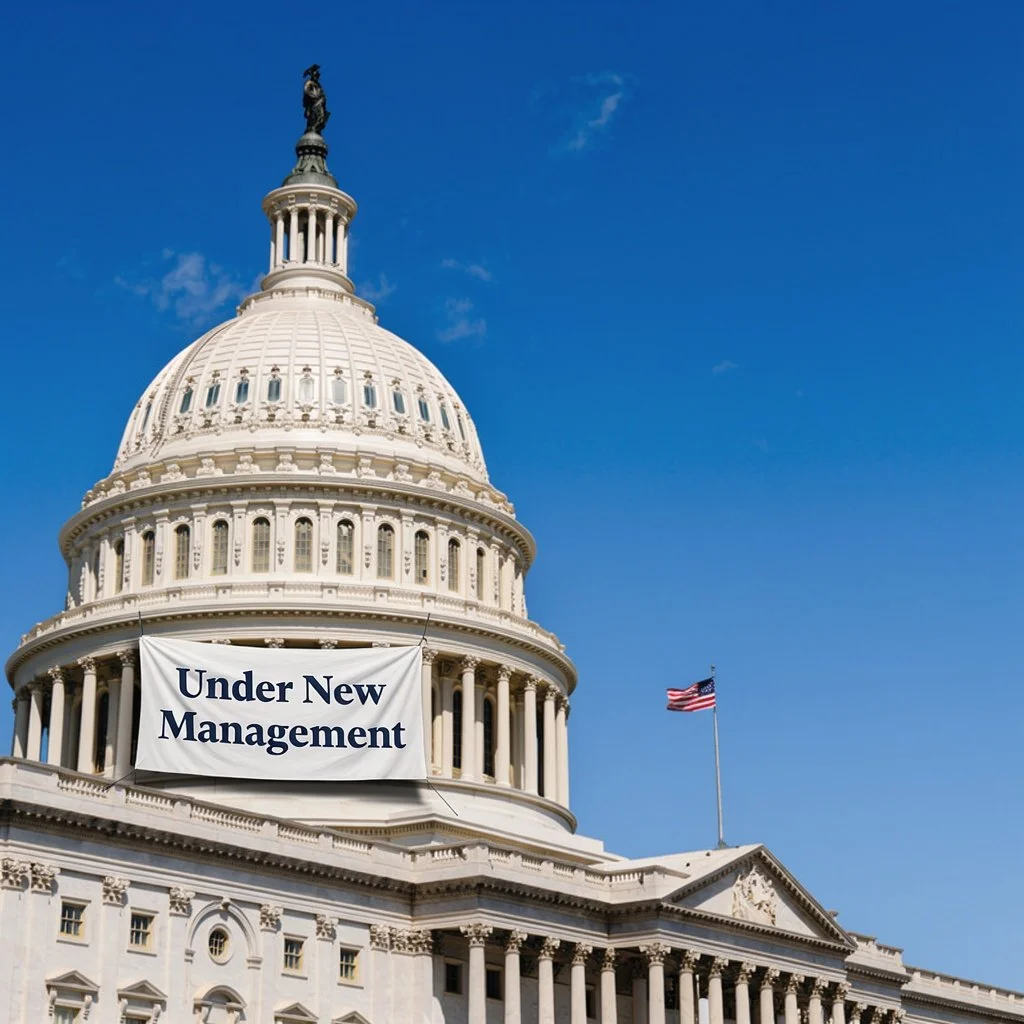
Fasten your seatbelts, folks. The next two years will be a wild congressional ride unlike any we’ve experienced in a long, long time.
Yes, there will be impeachment of Trump and possibly others. Yes, there will be investigations into the historic levels of corruption. But Democrats know from sorry past experience that the route to retaining power is getting things done that most voters want done to improve their own lives. That’s a long and fraught list:
Some form of Medicare for all; affordable child care and education; firming up the social safety net; reining in the monopolists and the megawealthy; dealing with the deficit; more workplace democracy; regulating AI, its data centers and threats to jobs; expanding housing opportunities; institutional and election reform, and, of course, finding ways to make the cost of living more affordable.
All of which will necessarily include a roll back of Trump’s tax cuts and other measures that will make many rich and powerful people unhappy.
Fresh Faces and the Pressure to Retain Democratic House Seats
Lack of visible progress on this agenda would place most newly won Democratic House seats at risk in 2028. As both the 2024 and the 2026 elections have shown, the voting public has little tolerance for failure. No excuses accepted.
While institutionally the Democratic party is the new congressional majority, it’s the individuals who won those seats who will decide on the agenda and how aggressively to fight for it. And a large incoming cadre of them aren’t the buttoned down Ivy League legal alumni or career politicians we’ve been accustomed to seeing there.
They’re more like Iowa’s Sarah Trone Garriott, a Lutheran minister with a long background in causes such as the Des Moines Religious Council Food Pantry network.
Bob Brooks, president of the Pennsylvania Professional Firefighters Association.
North Carolina farmer James Agar, who won acclaim helping neighbors after the state’s devastating hurricane Helene.
Wisconsin’s Mitchell Berman, an emergency room nurse.
Virginia’s Elaine Luria, a 20-year Navy veteran, surface warfare officer and nuclear engineer.
Texas’ Bobby Pulido, Latino Grammy winner.
Nancy Lacore, retired three-star admiral and chief of Navy Reserve.
Ohio’s Brian Poindexter, longtime union organizer.
Montana’s Sam Forstag, smokejumper.
Minnesota’s Jake Johnson, public school math teacher.
Kentucky’s Zach Dembo, former Department of Justice prosecutor.
California’s Marni von Wilpert, San Diego City Council member and former Peace Corps volunteer.
Over in the U.S. Senate, newcomers will include James Talarico, Abdul El-Sayed, Troy Jackson, Adam Hamilton, Annie Andrews, Peggy Flanagan, Sherrod Brown—all of whom can be expected to add their weight to a progressive agenda.
If the Democrats win one or two of the remaining undecided Senate races, in Alaska and Mississippi, it would create a reasonable possibility for attracting enough Republicans to pass legislation without needing to ditch the filibuster.
That type of bi-partisanship would have been unthinkable in the days when Mitch McConnell ruled the GOP Senate caucus with an iron fist, but it’s a different day now. Surviving Republican senators who face election in 2028 will need to decide just how MAGA a record they want to campaign on after this year’s debacle. With just a few GOP cooperating votes, this Congress would not need to abandon the filibuster. Without it, the filibuster will very much be a target.
Navigating Vetoes and an Unpredictable Political Horizon
To succeed, Democrats will need to overcome Trump vetoes. Or Vance vetoes, depending upon how clearly Republican legislators view their self-interest. Tricky business for Democratic leadership that may need to ask its fired up members for contentious compromise.
The new Congress also will work in the shadow of the most open Democratic party presidential nominating contest in decades, where the spectrum of policy proposals from candidates could be as divergent as those of AOC to Rahm Emanuel.
Post election, many media outlets are framing the result as a victory for Democratic “moderates” over “progressives.” I’d advise them to take a look at the web sites, promises and backgrounds of most of the winning Democrats. This election moved the definition of mainstream firmly left. This will be a Congress that considers, and likely passes much of an agenda that only a few years ago was considered Bernie Sanders’ wish list.
Here’s today’s political mainstream, in James Talarico’s victory speech https://www.youtube.com/watch?v=cK8wzjBpEoQ
Impeachment, investigations, Medicare for all, term limits for the Supreme Court, statehood for Puerto Rico and the District of Columbia, a tax increase on wealth, a constitutional amendment to overturn Citizens United, new anti-monopoly legislation—-those are just some of the predictable headline battles we can expect.
The past two years have been mentally challenging for those of us who pay close attention to the workings of politics and government. Don’t expect relief from the agenda to come. It will be hard to look away.
Comments? Criticism? Contact Joe Rothstein at jrothstein@rothstein.net
Always Get It’s Always Something
Sign up to get the most recent column set to your inbox for free.



What happens when a fun-loving, charismatic, reform-minded Mexican-American billionairess becomes president of the United States and strikes fear in the pocketbooks of a cabal of the rich and powerful?