The Wealth Gap and The Election
U.S. political campaigns are often characterized as battles between the political left and right, liberals vs. conservatives. This year, though, the most important choices are up or down.
In California and Washington state, measures to increase taxes on wealth are on the ballot. Rhode Island enacted such a tax earlier this year. According to recent polling, two-thirds of Americans favor increasing tax rates on upper income payers. Even 51% of Republicans support a billionaire tax. In many forms, the wealth gap is being debated and tested as seldom before.
In a few weeks we will learn whether those views will be validated by electing candidates who share them.
What’s driving this year’s aggressive tax-the-rich political environment?
Why The Wealth Gap Is A Factor In the Election
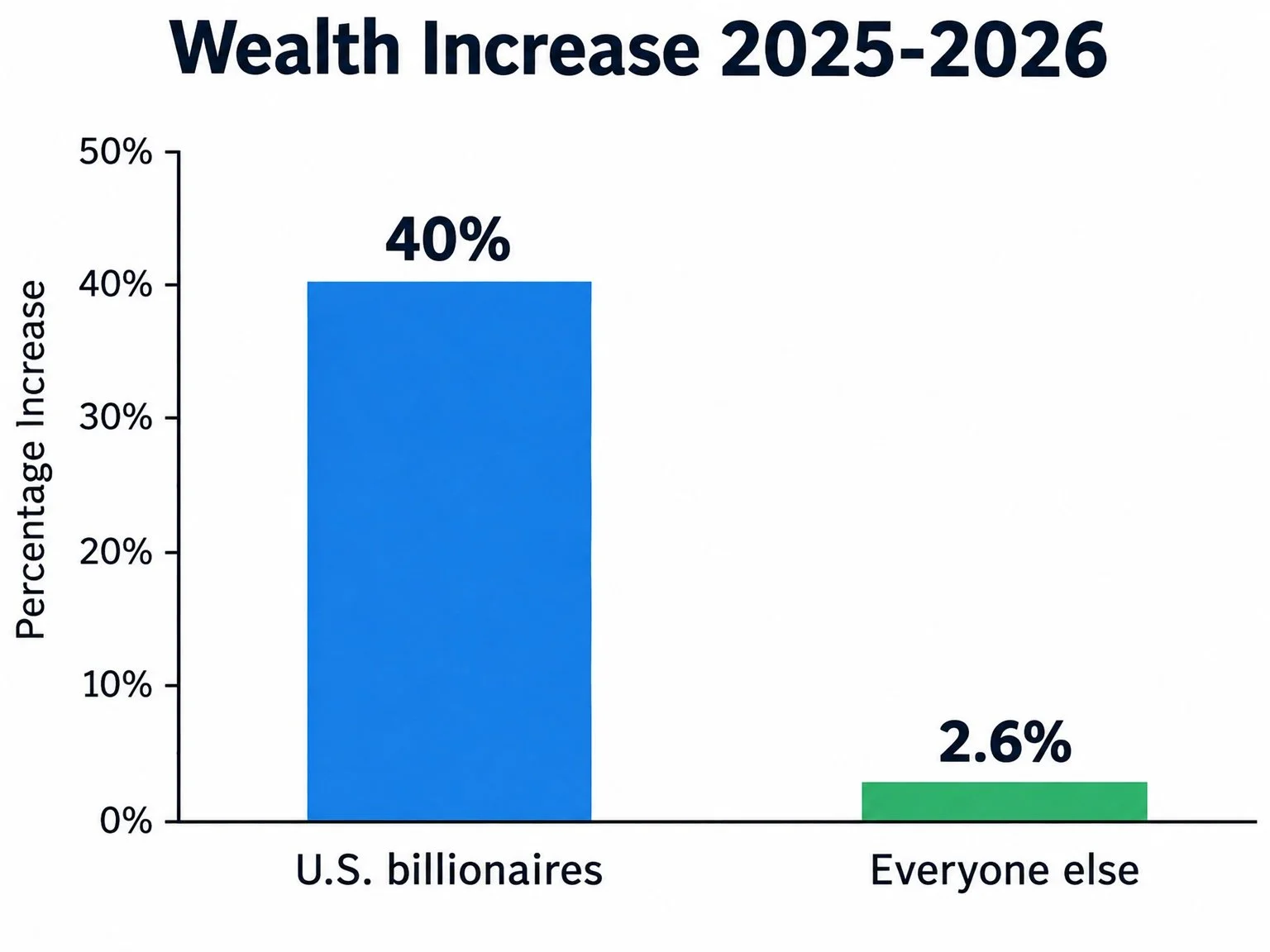
For one thing, the wealth gap is accelerating. In less than two years, according to an economic study published June 9 by the New York Times, the 2025 Republican tax cuts and a booming stock market have increased U.S. billionaire wealth by 40%, from $6.6 trillion from $9.2 trillion. During the same period, stifled by higher prices, an uncertain job market, and a tax code skewed against them, the wealth of all other U.S. households has been virtually stagnant, growing just 2.6%.
And it’s not just the wealth gap most voters are feeling. The same “One Big Beautiful” tax cut that added to billionaire wealth took more than a $1.1 trillion from the nation’s health infrastructure and other services relied on by middle and lower income families. Medicare, Medicaid, Affordable Care insurance, food stamps—they all took big hits.
The Iran war, tariffs and other Trump policies have driven up costs that are hitting workers’ wallets hard while fattening shareholders’ portfolios.
Much of the new wealth is held by those who pioneered and developed our new tech world. According to Forbes Magazine, Elon Musk’s wealth tops $1 trillion. Amazon’s Jeff Bezos’$375.4 billion. Google co-founder Sergey Brin, $262.4 billion.
How Tech Billionaires Lost Public Trust
It wasn’t long ago that most Americans admired these brilliant young entrepreneurs. But they haven’t aged well. Many of them are in a reckless race to develop AI despite uncertainty whether humanity will lose control of it. Many of them are building data centers where they aren’t welcome.
It doesn’t help their image that Musk calls non-profit charitable giving a waste of money, and others have taken their names off a giving pledge they signed just a few years ago. Or that the notably tight-fisted Bezos spent a reported $50 million on his wedding.
Sergey Brin, unwilling to part with 5% ($13 billion) of his $262 billion fortune, has personally spent nearly $200 million trying to defeat a one-time wealth tax on this year’s California ballot. That 5% is earmarked to fill a $30 billion hole in California’s health program caused by the 2025 tax cut that made Brin infinitely richer.
These are not the Rockefellers, Vanderbilts and Carnegies, who, despite their robber baron ways, left us great hospitals, libraries, universities and other institutions.
Bad Billionaire Behavior and the Generous Exceptions
Many of the tech billionaires have adopted Trump into their fraternity, they’re often in his presence, showering him with millions, supplicants for massive pay-to-play government contracts he hands out. Trump’s sinking poll numbers are taking them down with him. In a recent poll of political battleground districts, 66% held unfavorable opinions of “big tech.”
So many billionaires, behaving so badly.
Many, but not all of the mega-rich.
McKenzie Scott, Bezos’ former wife, won a $46 billion settlement when they divorced and pledged to give it away. So far, she’s donated $25 billion to more than 2,000 charities. She still has a fortune estimated worth about $40 billion. How is that possible? Because you can fill your larder with yachts, private jets, multiple estates, fine art and most everything your mind can imagine and the total would not likely top a billion dollars. The rest of your wealth just goes to investments that make you richer.
The Push for Tax Reform and Power in the Ballot Box
Bill Gates has been tech’s most prolific donor. He’s given away $64 billion. The seven top principals of the AI company Anthropic have pledged to give away 80% of their fortune, more than $100 million at today’s values.
Among advocates for progressive national tax reform is the organization Patriotic Millionaires. They’ve developed legislation pending in Congress to lower the tax burden on middle and lower earning taxpayers and fill that gap with a higher graduated taxes on those reporting a million or more in revenue.
Could that succeed, even with a blue wave November 3? There’s still the filibuster and Trump’s likely veto to overcome. Would even polls showing more than two-thirds of U.S. voters in favor be enough?
Maybe.
According to those polls, higher taxes on billionaires is a bipartisan issue. And this is still a democracy.
Comments? Criticism? Contact Joe Rothstein at jrothstein@rothstein.net
Always Get It’s Always Something
Sign up to get the most recent column set to your inbox for free.


What happens when a fun-loving, charismatic, reform-minded Mexican-American billionairess becomes president of the United States and strikes fear in the pocketbooks of a cabal of the rich and powerful?