‘Tax the Billionaires!’ will be 2026 Campaign’s Version of ‘Affordability’
When Zohran Mamdani surprisingly won 2025’s Democratic party primary for mayor of New York, his campaign for “affordability” became the political wave that many other Democratic candidates copied and rode to victory.
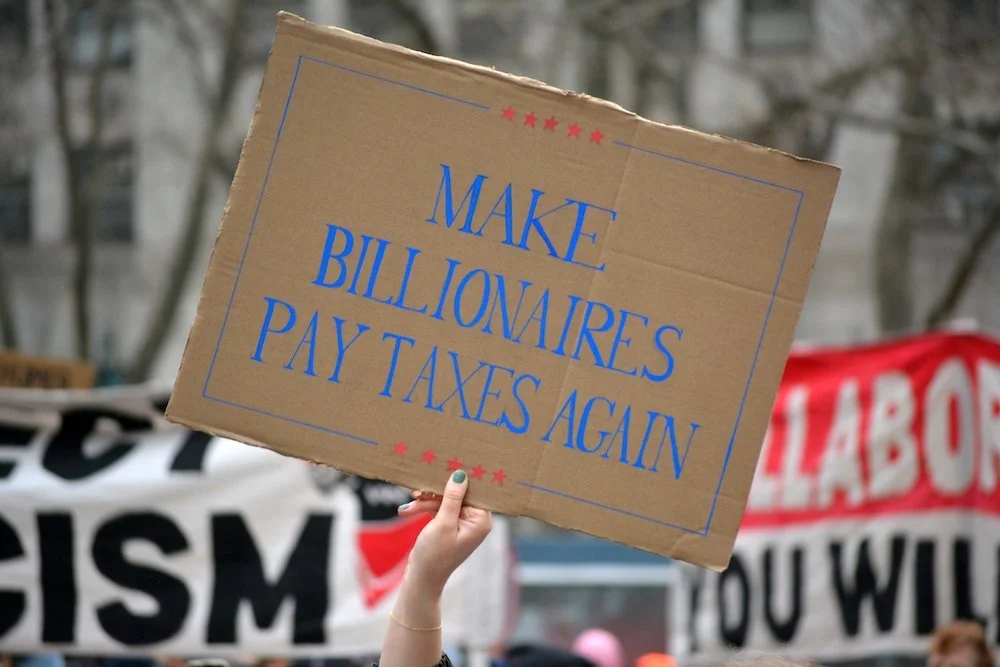
Now we’re in 2026, with many more elections ahead and much higher stakes. The wave that’s building this year is affordability ‘s much more activist cousin, “Tax the billionaires.”
Just last week, Washington state’s legislature approved a 9.9 percent tax on households reporting more than $1 million in annual income. Comparable issues are front and center this year in Michigan, Rhode Island, New York, Illinois and California.
The Rise of Tax the Rich Policies in 2026
Massachusetts recently enacted a 4% surtax on income over $1 million that already has provided $6 billion for state and local education and transportation. Contrary to arguments that such a tax would cause the rich to flee Massachusetts, the state has gained population.
No wonder other cash-strapped states are eyeing the nation’s biggest money hoarders to contribute more for necessary public services.
According to a study by the Institute for Taxation and Economic Policy, in 41 states, high-income families are taxed at lower rates than everyone else.
That’s the result of past public policy choices mostly driven by those who can afford expensive tax lobbyists in state capitals and Washington, DC, as opposed to those who can’t.
Billionaire Wealth Fuels Growing Public Backlash
So, what’s different about 2026?
The billionaire class, I think it’s fair to say, has brought this new tax-the-rich activism on itself. It’s the culmination of years of overt greed, callousness and misuse of financial power.
In a relatively brief span of time, we have seen dozens of billionaires willing to sign Warren Buffet and Bill Gates’s “Giving Pledge,” to donate much of their fortunes to charity, evolve to a place where Elon Musk, the world’s richest person, can argue that his businesses are philanthropy.
Over the past eight years, since Trump’s first year in the White House, the net worth of America’s richest people has more than doubled, while the average household’s has barely kept up. Food, housing, medical costs, education, energy. That’s why “affordability” was such a powerful political issue in 2025.
Meanwhile, a mega-rich Wall Street operator like Stephen Schwarzman, CEO of the private equity firm Blackstone, saw his wealth balloon from $13 billion in 2017 to $45 billion in 2025. Republican tax cuts contributed greatly to that windfall.
Not only have the rich become massively richer during the Trump years, many are more visibly arrogant flaunting their wealth and increasingly politically active, posing real danger to democracy.
Shaping Policy and Democracy in the 2026 Political Landscape
Many tech billionaires, who much of America once admired as self-made “tech-gods,” now seem to believe they actually are god-like in knowing how to run the country, if not the world, using the power of their billions to shape everything from education to government.
And it’s their energy and land eating data centers, their involvement with Epstein, the private islands where they park and hide their money from taxation, the fascist-loving X (formerly Twitter) site, the callousness to the harm created by social media, their insensitivity to the jobs their AI will cost, Bezos’ $50 million wedding, the cozying up to Trump, a man none of them would consider hiring for any job in their own businesses, the viciousness with how they fight proposals to have them part with financial crumbs of their fortunes to help pay for education, transportation, public safety, law enforcement and courts, which benefited their rise and which they need secure to keep rising.
Sergey Brin, one of Google’s founders, already has contributed $45 million to a campaign to keep a proposed 5% billionaire’s tax from going on California’s ballot. Brin’s net worth is an estimated $260 billion, about double what it was two years ago. A 5% tax would cost him $11 billion.
According to a 2025 Pew Research poll, about 6 in 10 Americans favor not only raising taxes on large businesses and corporations, but for those with household income more than $400,000 as well.
As Trump’s economy gets worse, prices rise and jobs and essential services get cut, adjusting public policy to make the wealthiest pay more makes “tax the rich,” a very powerful campaign message.
All the money the mega-rich will throw into the 2026 campaign will only help reinforce the case they have too much.
The billionaire class has squandered whatever trust Americans once had in it. No matter how much money they spend campaigning, they won’t get that trust back before November.
Comments? Criticism? Contact Joe Rothstein at jrothstein@rothstein.net
Always Get It’s Always Something
Sign up to get the most recent column set to your inbox for free.


What happens when a fun-loving, charismatic, reform-minded Mexican-American billionairess becomes president of the United States and strikes fear in the pocketbooks of a cabal of the rich and powerful?