What’s Wrong with U.S. Democracy?
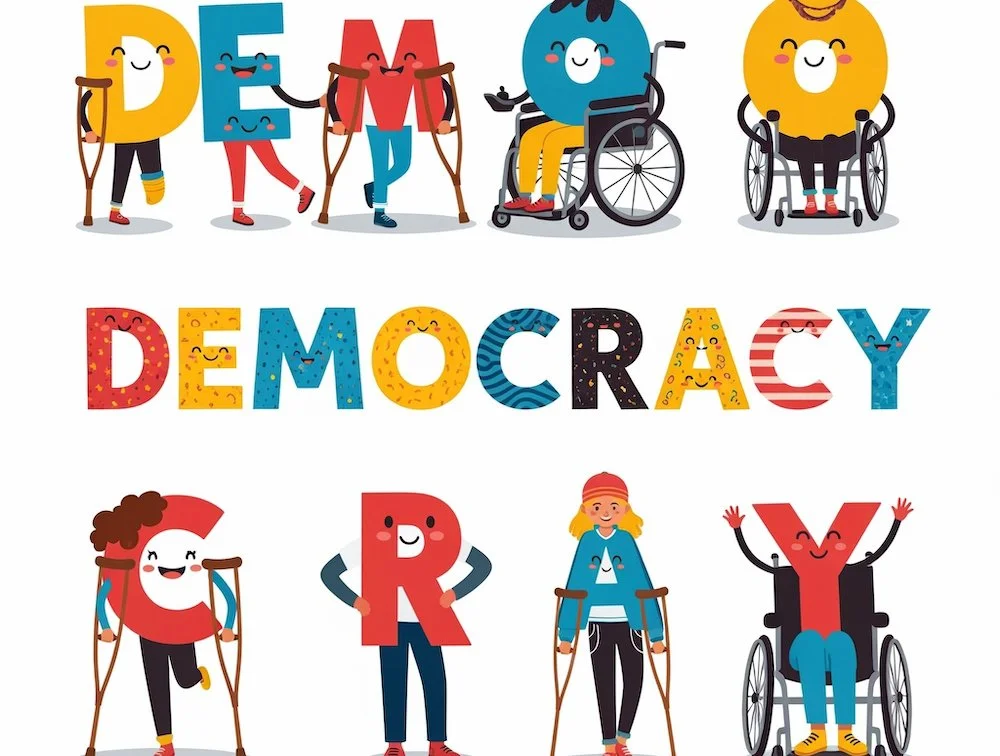
In a nation that turns out more Nobel prize winners than all others combined, a nation that leads the world in scientific achievement, health care discovery, military prowess, technology, agriculture, economics, capital formation and so many other essential fields of human activity, why do we have so much difficulty governing ourselves?
We invented modern democracy and have maintained it for 250 years, through civil and world wars, depressions, the industrial and digital revolutions. You’d think that by now we would have the smarts and systems to do it right. What’s wrong? And how do we fix it?
As we welcome the 250th year anniversary of the Declaration of Independence, this is the first of a number of newsletters I plan to write exploring that question.
The Problem With Majority Rule and Low-Turnout Elections
Let’s start with majority rule and the consequences of not having it.
An all-too typical case is House Majority leader Mike Johnson. Johnson was first elected to the House in 2016. His is a Republican majority district where winning the Republican primary virtually assures victory in the November general election.
The year he first won election, Johnson received just 24.7% of the vote in a multi-candidate primary. That means 75% of the district’s Republican voters either didn’t vote for him, or didn’t vote at all. Once entrenched, few members leave involuntarily.
In the high-visibility recent special election for an open Republican seat in Tennessee’s seventh congressional district, Matt Van Epps won a three candidate Republican primary with just 19,000 votes. Do the math. He’s now the congressman because he won 3.45% of his district’s eligible vote. No, I didn’t omit any zeros. Just 3.45% of the 550,000 adults in his district cleared his path to Congress.
These are not outliers. Most elections that send men and women to the Congress for the first time are won by candidates whose level of support barely registers on the turnout scale. It’s not unusual for only 20% of the district’s eligible voters to cast ballots in a primary or special election. Divide that by two for each party’s primary. Divide even further when there are three, four, five or more candidate choices in an open seat primary, as often happens.
Here’s the result.
If Democrat Afyn Behn, after winning a three candidate primary, had pulled a major upset and won that Tennessee special election, her path to victory would have been a primary election win with 8,648 votes, or 1.5% of the eligible vote.
Low turnouts in plurality districts also affect well-known incumbents. The threat of being “primaried” has resonance for members of congress, state legislators and even low visibility statewide office holders.
If a member refuses to vote in lockstep with party policy, congressional leaders and their allied special interest groups and contributors can withhold money, recruit well-funded opponents, and create dark money PACs to challenge straying members. That’s why just the threat of primary opposition from Donald Trump has kept most Republican members of congress voting in support of Trump’s agenda, even on measures they personally don’t agreed with.
Campaign Finance Pressures and the Limits of Plurality Rule
So, what’s the answer? How do we resolve the problem of low turnout plurality rule and the financial pressure that affects voting choices for candidates and incumbents?
The answers to the big money problem are self-evident. Public financing of campaigns, or contribution or spending limits, or full disclosure of contributions or all of the above.
The Supreme Court’s Citizens United decision ended much of what was right about campaign spending rules. Now, the Supreme Court appears to be on the cusp of deciding that there are no rules at all. Unless or until there is major change in the composition of the court, these decisions need to be repealed by constitutional amendment. Serious efforts are underway to do that. More on this topic in a forthcoming newsletter.
Optional public financing actually exists for presidential candidates who agree not to accept private funds, but at a level of support so low it discourages candidates from making that choice. Fifteen states have some form of public funding for state and local candidates. The whole range of public funding needs to be revisited and updated.
As for low turnouts, and majority rule, the path is more complicated. Run-offs between the top two finishers would do it. Seven states require them. Ranked choice voting exists in some form or other in five states and the District of Columbia and in many local races.
How Ranked Choice Voting Strengthens Majority Rule
Ranked choice voting works like this, using the recent congressional election in Tennessee’s 7th congressional district as an example.
On the Democratic ballot, Afyn Benn won a three-candidate primary with just 36% of 23,856 total Democratic votes cast.
With a ranked choice system, Democratic primary voters would have voted for the candidate they preferred, as in a typical election. Then they would have had an opportunity to designate their second and third choices. Since no candidate reached the 50%+1 threshold in the Tennessee Democratic primary, the third place finisher’s vote would have been redistributed to whoever those voters selected as their second choice. That would create an instant runoff between the top two, ensuring that the nominee would represent the majority of voters.
Majority voting reforms make results more representative but do not address the low turnout problem itself.
As for how we upgrade the quality of our candidates, that’s also a topic for another day. But I’ll close with this:
The website Run for Something encourages people, particularly progressive young people, to run for office. Any office. Local, state or national. And then provides training and contacts to help novice candidates go for it.
Since the program began in 2017 Run for Something claims to have recruited 200,000 potential candidates, 1,200 just since this November’s elections.
The program’s mantra is “You can change the system by changing who’s in it.”
That’s not the complete answer to “What’s wrong with U.S. democracy?” But it’s a big part of the puzzle.
Here’s this week’s STEM Winder: A weekly look into the future.

Comments? Criticism? Contact Joe Rothstein at jrothstein@rothstein.net
Always Get It’s Always Something
Sign up to get the most recent column set to your inbox for free.



What happens when a fun-loving, charismatic, reform-minded Mexican-American billionairess becomes president of the United States and strikes fear in the pocketbooks of a cabal of the rich and powerful?